
5H10.70 • Faraday Disk
Location: Cabinet 2
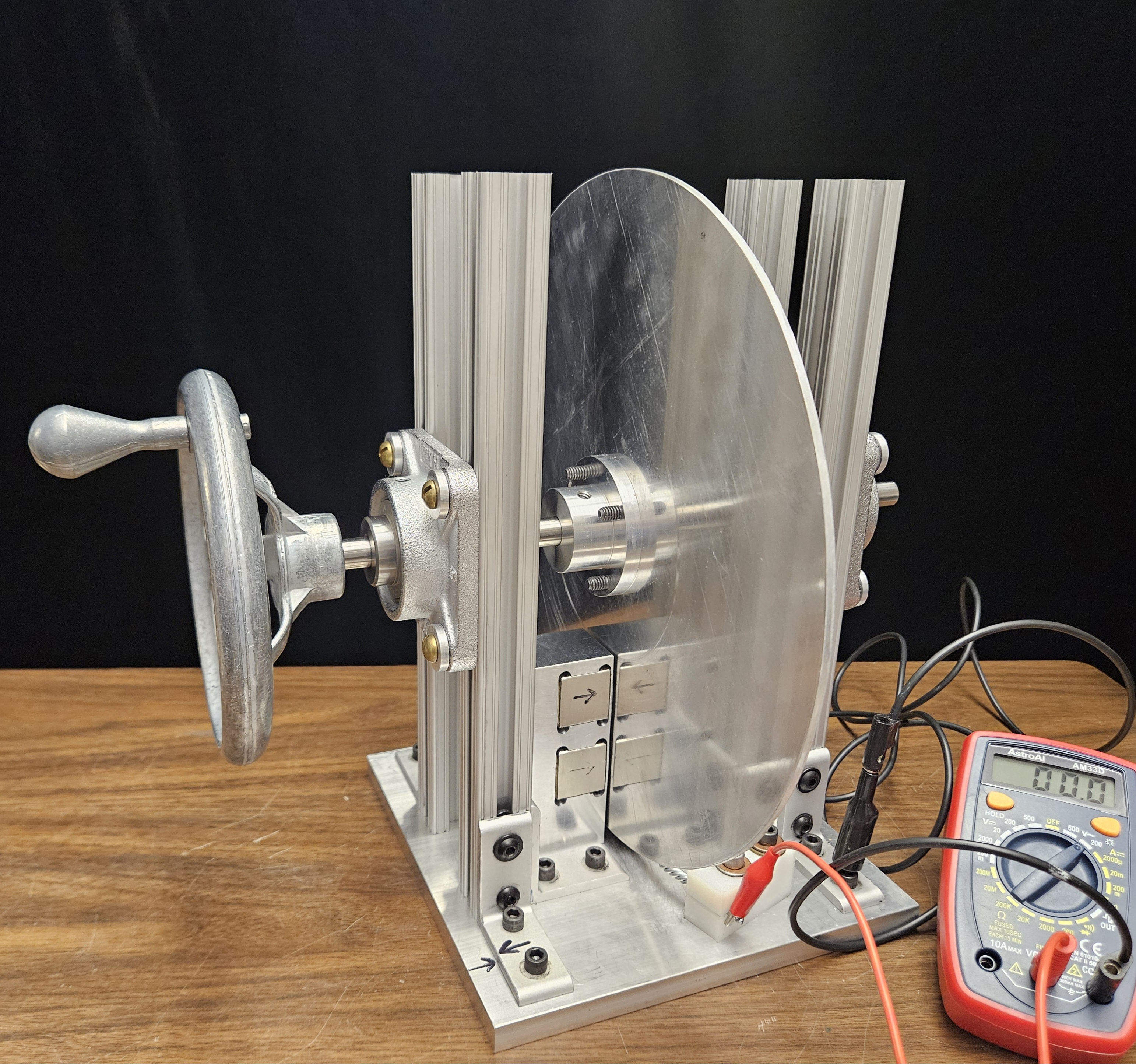
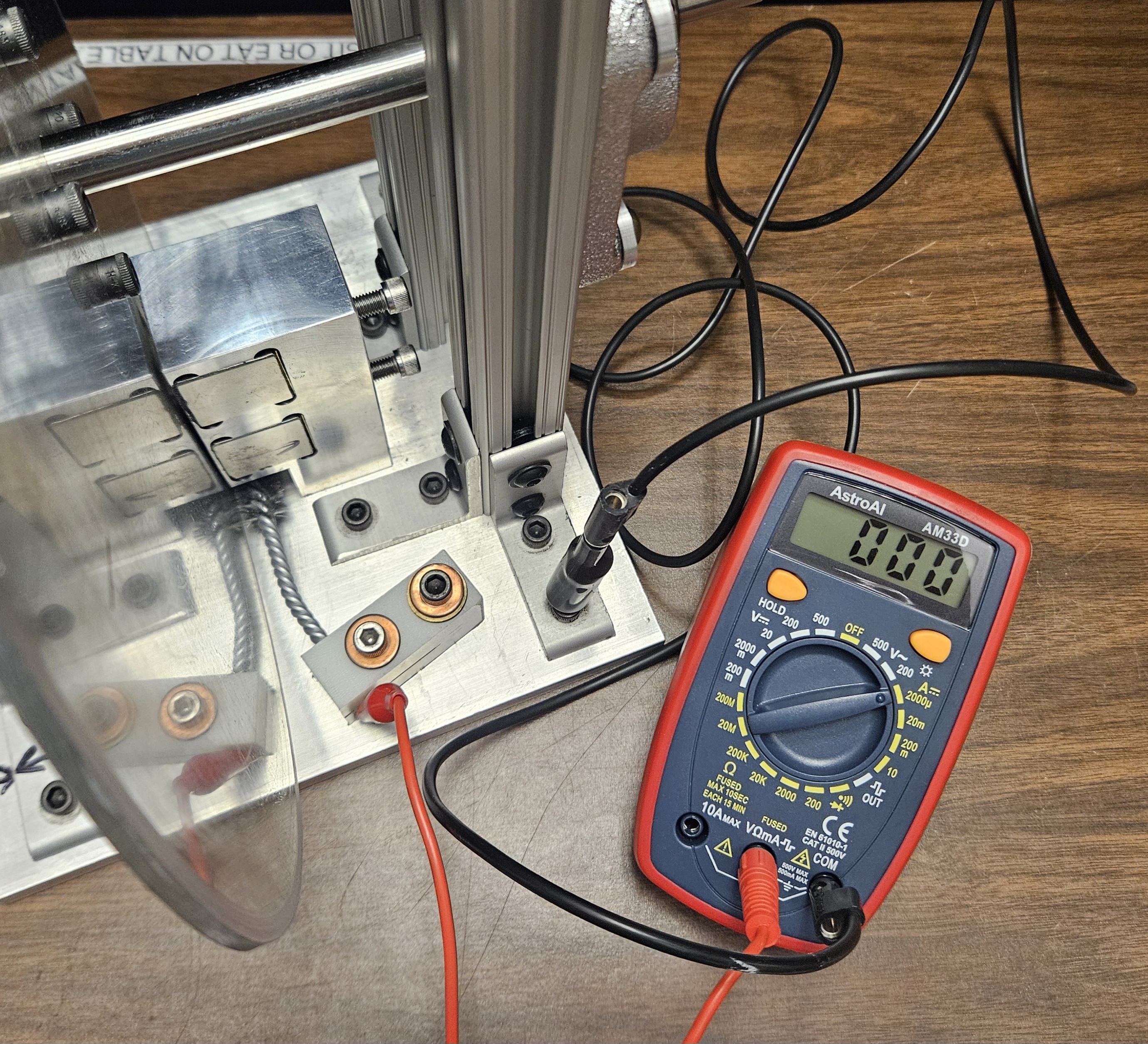
Photo shows the demonstration used at the University of Texas at Austin.
Concept conveyed:
- Motional EMF in how the turning disk generates voltage just from moving
- Lorentz Force from the the velocity of the moving disk in relation to the magnetic field it is passing through
- Shows eddy currents as a result of not having magnets all around the disk; was not intended to show eddy currents but could be used to show them
Instructions:
- Attach the red wire to the end of the brush and the black wire to a side screw (ground). Red goes into the middle section on the microammeter, black goes into the right section
- Turn the handle until a difference on the microammeter is seen
- Can take a lot of force to get it to actually show the effect, so be careful!
Demo Staff:
- Make sure this demo is clamped down to a very stable table, and use as many clamps as you can with out interfering with turning the handle
Fixes to Possible Issues:
- If the disk is not moving with the turning of the handle, try tightening the set screws with an allen wrench. If that doesn't fix the issue, see if the disk is rubbing against the magnets or no longer centered between the magnets and correct the issue.
- Magnet Handling During Disassembly: The N52 neodymium magnets are extremely strong and are the most hazardous component of the apparatus. When removing them for cleaning or repair, they should be separated from one another and from any ferrous tools using the standard wood-spacer protocol: insert a wood block between adjacent magnets and slide the magnets apart along the wood surface, never allowing them to snap together. Pinches from suddenly attracting magnets are the most common injuries.
- Rim Brush Wear: The brush that contacts the rim of the disk is continuously sliding during operation and is the most wear-prone electrical component. It should be inspected periodically and replaced if the contact surface has worn unevenly or shortened appreciably. The Teflon block holding the brush allows for pivoting to re-establish contact after light wear. This feature should be used to fully utilize a brush before replacement.
- Rim Brush Short Circuit: Because the entire structural frame of the apparatus is metallic, the rim brush must remain electrically isolated by the Teflon block in which it is mounted. If the brush slips out of position or contacts the metallic frame directly, the output is shorted to ground through the frame. The short is electrically harmless (the voltage is far too low for any risk of electrocution) but produces no observable output, and the demonstration will appear to fail entirely. If the apparatus produces no output, this is the first thing to check.
- Teflon Clamp Screw: The Teflon block holding the rim brush clamps onto the brush by tightening a screw that threads directly into the Teflon. The threads are easily stripped if the screw is overtightened, and the block would then need to be replaced or re-tapped. The brush is already a snug fit in the block, so the clamp screw should be tightened only enough to prevent slippage.
Last updated on July 23, 2026